
Jump to content


All Activity

This stream auto-updates

  1. Past hour
  2. Thanks guys! I have an update for you. The 2005 White Sox were requested. I just thought they'd be terribly lonely. So I rolled up my sleeves and set about transferring previously unreleased portraits of players from the late 1990s/early 2000s into the mid90s mod. Many portraits were from my early days = poor quality. Thanks to AI, I was able to quickly rework several, and I recreated others from scratch. All in all, around 100 new portraits were added. đŸ€Ș Some players received their long-deserved ones ... Some were years away from being in the original game ... ... and others just received a nice update ... ... while others heard their names echoing through the stadiums for the first time: Chipper.wav Jeter.wav You heard right! I added lots of audio. While any combination of names that existed in the original game poses no problem (Alex Rodriguez, David Ortiz and so on), things get tricky when it comes to introducing new audio into the game (Pujols for example). On the one hand, AI makes many things possible, but the game has its flaws. Unfortunately, a very lossy compression method was used for the audio files. This results in poor sound quality and likely explains why most of the newly added sound files are plagued by glitches. It is also very likely that I am not using the exact same compression. In short: Some sound great ... Berkman.wav ... others terrible ... Guerrero.wav Varitek.wav Most have a noticeable distortion. Therefore, I added a roster where the worst-sounding names were removed. Furthermore, I wrote a short guide on how to easily modify sound (and portraits) so you can easily get rid of anyone that's more annoying than pleasant to hear for you. If any DOS-Sound-Geek is reading this and is familiar with ADPCM formats, I would greatly appreciate advice and help. â˜ș Last but not least: I don't have a roster for those years in question. My recommendation is to combine the players with the existing one (1995) rather than focusing on a specific year. Otherwise, you'll have to live with many missing portraits. Oh, and I almost forgot: I slightly modified the original patch with the 162-game schedule so that you can choose any year between 1985 and 2005 for your season. Enjoy! update mid 90s mod.zip
  3. Phillies re-signed DH Kyle Schwarber to a five-year, $150 million contract. Pirates signed RHP Gregory Soto to a one-year, $7.75 million contract. Tigers signed RHP Kyle Finnegan to a two-year, $19 million contract. Rays signed RHP Steven Matz to a two-year, $15 million contract.
  4. 6/10, 75 seconds. I'm surprised I got that many correct.
  5. Today
  6. From now on put the player's name in the file description. Do not use "Players 2025." This will help when people search for the player.
  7. Version 1.0.0

    0 downloads

    Darell Hernaiz
    Maybe I used the LIT tool wrong, but this .sav only included the historical Mini Interleague teams when imported. Thank you for uploading it though!
  8. 7/10 99 seconds
  9. Version 1.0.0

    2 downloads

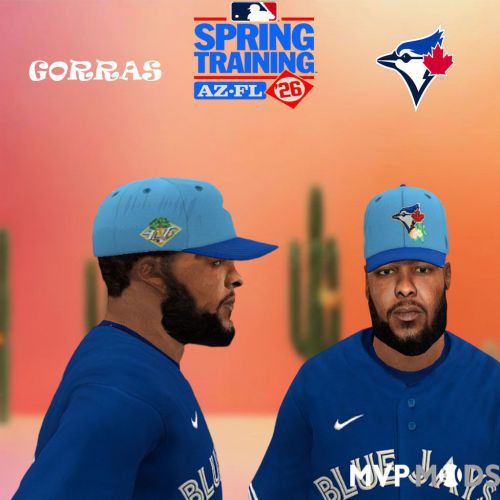
    Davis Schneider
  10. 8 out of 10, 63 seconds. Slow day today but resourceful. And if I didn't screw it up I would have had nine right.
  11. Version 1.0.0

    5 downloads

    Miguel Rojas
  12. Version 1.0.0

    4 downloads

    Corbin Carrol
  13. I don't even know what Group H is.
  14. wil19982

    Seiya suzuki

    Version 1.0.0

    7 downloads

    Telegram Free https://t.me/+qtwMzkmZ75tlY2I5
  15. Version 1.0.0

    3 downloads

    Telegram Free https://t.me/+qtwMzkmZ75tlY2I5
  16. It was one of those: Who placed first in the world cup european qualifiers group H in 2002? It was Italy. But I don't think even the italians would remember that.
  17. Yesterday
  18. 7/10, 53 seconds. And I missed a soccer question.
  19. Diamondbacks signed RHP Isaiah Campbell to a minor league contract Rockies signed RHP Eiberson Castellano to a minor league contract. Pirates re-signed INF/OF Ronny Simon to a minor league contract Angels signed LHP Angel Perdomo to a minor league contract Angels re-signed C SebastiĂĄn Rivero to a minor league contract Athletics signed RHP Luis Contreras to a minor league contract Angels acquired INF Vaughn Grissom from the Red Sox for OF Isaiah Jackson. Astros signed RHP Ryan Weiss to a one-year, $2.6 million contract. White Sox signed LHP Anthony Kay to a two-year, $12 million contract.
  20. Rip Radcliff He had more to do with its demise than its institution: nevertheless, Rip Radcliff is among that handful of major leaguers who inspired a change in a league’s rules. The rule, established at the December 1939 baseball meetings in Cincinnati, was a bizarre one that lasted for just a short time. The owners of seven of the eight American League teams pushed through an edict that would bar their league’s defending champion from making a player transaction with any of the other clubs in the league. It was a measure obviously aimed directly at the lone dissenting team, the New York Yankees, who in addition to being the defending American League champions, were also winners of the last four World Series. Whether the rule prevented the Yankees from repeating in 1940 — they believed it did — they were replaced as pennant-winners by the Detroit Tigers. Thus, on May 5, 1941, when Detroit purchased Radcliff for $25,000, it was the Tigers, and not the Yankees, who were the defending American League champions. Radcliff’s sale set off a wave of criticism by the league’s other teams, claiming the sale violated the “spirit” of the law forbidding intraleague trades or purchases (except on waivers) with last year’s pennant-winner. Although the sale went through, the acrimony it generated convinced the owners, led by Washington’s Clark Griffith, that they’d made an unworkable rule and they abolished it. Raymond Allen Radcliff was born in Kiowa, Oklahoma, on January 19, 1906. Everyone agrees that it was his father who gave Radcliff the nickname “Rip”; there are, however, sundry versions of why he did so. In one, Papa Radcliff compared his young son’s sleeping ability to that of Rip Van Winkle. In another, he got the name from a show called “Rip Van Winkle” that was playing in Kiowa. A third claimed the name had started as “The Ripper” because of the youngster’s frequent tearing of his clothes and then got shortened to “Rip.” Radcliff grew up playing baseball on the Kiowa sandlots while building a strong body working in his father’s blacksmith shop. After graduating from high school, he played several years of semipro baseball in Kiowa. His father and two elder brothers, all of whom had also played semipro ball, urged him to accept the college scholarship he’d been offered, but Radcliff refused. “The only way to get rich quick is to get out there and play some professional baseball,” he said. A left-handed batter and thrower, the five-foot 10, 170-pound Radcliff began his professional career in 1928 with the Paris (Texas) Colts of the Class D Lone Star League. Despite compiling eye-catching batting averages wherever he played, he would spend the next six seasons in the minors. Those averages included a .359 mark for the Muskogee (Oklahoma) Chiefs of the Class C Western Association in 1929, .369 for the Selma (Albama.) Cloverleafs of the Class B Southeastern League in 1930, .361 for the Shreveport (Louisiana) Sports of the Class A Texas League in 1931, and .364 in 1933 for the St. Paul (Minnesota) Saints of the American Association in AA ball, the highest designation at the time. At Selma in 1930, Radcliff was a Triple Crown winner, leading in both home runs (15) and runs batted in (116) to go along with his league-leading batting average. He also led the league in total hits, as he did the following year for Shreveport when he won another batting title. Originally a first baseman, Radcliff switched to the outfield while playing under manager Jakie Atz at Shreveport. So it was as an outfielder that he reported to the Philadelphia Athletics spring training camp at Ft. Myers, Florida, in 1934 after Philadelphia secured him in a trade with St. Paul. Radcliff later recalled that during training camp, A’s manager Connie Mack mentioned he was looking for a catcher. Radcliff recommended Hank Erickson, who was with Louisville of the American Association. Mack took the recommendation and sent Radcliff to Louisville in a deal for Erickson. A disappointed Radcliff went to Louisville, where he had another fine season, batting .335 for the Colonels. That prompted the last-place Chicago White Sox to buy him and include him in their September call-ups. He made his big-league debut on September 17, and appeared in 14 late-season games. After hitting a respectable .286 as a 29-year-old rookie in 1935, Radcliff started slowly in 1936–so slowly, that three weeks into the season, White Sox manager Jimmy Dykes convinced owner J. Louis Comiskey to claim Yankees outfielder Dixie Walker as a possible replacement. But when Walker injured a shoulder soon after joining the Sox, Radcliff got another chance. He came out of his slump and went on to have an outstanding season, totaling 207 hits and a .335 batting average while exceeding the league average in on-base and slugging percentages. He continued to be a particular thorn in the side of the pennant-winning Yankees, batting .370 against them on the heels of his .380 mark in 1935. Radcliff further upset the New Yorkers in 1939 by plowing into Yankees third baseman Red Rolfe as part of a series of “incidents” between the two clubs that season. Mickey Cochrane, manager of the defending champion Tigers, was scheduled to be the American League manager for the All-Star Game in 1936. Cochrane, however, was in Wyoming recovering from a nervous breakdown, and the league chose Joe McCarthy of the Yankees to take his place. Saying he wanted a starting lineup that the fans might have chosen, McCarthy selected Radcliff to start in left field. Rip’s outfield mates at Boston’s Braves Field that afternoon were Cleveland’s Earl Averill in center field and the Yanks’ Joe DiMaggio in right. The Nationals won the game, 4-3; claiming their first All-Star win, although the game is best remembered for DiMaggio’s “failures.” The league’s rookie sensation was hitless in five at-bats and had a shaky day in the field. Radcliff played five innings before Goose Goslin of the Tigers replaced him. He was 1-for-2, grounding out against Dizzy Dean and stroking an 0-2 pitch for a single against Carl Hubbell. An average defensive player at best, he also contributed an excellent fielding play, making a fine catch of a long drive hit by Joe Medwick. Eleven days after playing in the midsummer classic, Radcliff had the greatest game of his career. He had six hits in seven at-bats as the White Sox crushed the A’s 21-14 in the second game of a doubleheader at Shibe Park. Radcliff’s six hits (four singles and two doubles) tied an American League record for a nine-inning game. The Sox went on to finish third in 1936, their highest place in the standings since the Black Sox scandal surfaced back in 1920. Radcliff continued his solid hitting over the next two seasons, batting .325 in 1937 and .330 in 1938. A series of injuries, along with foot problems, limited him to just 113 games in 1939, and his batting average plunged to a full-season career-low of .264. Dykes, ignoring the injuries, believed Radcliff was on the downgrade. On December 8, Chicago traded him to the St. Louis Browns for outfielder Moose Solters. Healthy again after off-season surgery, Radcliff rebounded to hit .342 for the 1940 Browns, fourth highest in the league. He also shared with Boston’s Doc Cramer and Detroit’s Barney McCosky the American League lead with 200 hits and finished ninth in voting for the Most Valuable Player award. “I just hit ‘er when she’s in there,” Radcliff told the Sporting News that season. “Some pitchers are tougher than others of course, but when you’re getting hold of the ball, it doesn’t really make much difference.” Oddly, given his standing as the number two batter in the league on the morning of the All-Star game, Radcliff did not make the American League’s squad in 1940. St. Louis and Washington were both mediocre teams that season; nevertheless, they did play one memorable game. On June 21, rookie pitcher Sid Hudson of the Senators took a 1-0 no-hitter into the 9th inning. Radcliff, the leadoff batter, ended Hudson’s bid with a pop-fly double down the right field line. He went to third on a passed ball, but Hudson retired the next three batters to preserve the 1-0 victory. In May 1941, at the time of his controversial sale to Detroit, Radcliff was batting .282 for the Browns. In retrospect, the best explanation for why six teams would pass on such a fine hitter may be that it was a “gentleman’s agreement,” one designed to help both teams. The addition of Radcliff would help the Tigers make up for the loss of Hank Greenberg, who’d been called into the Army, and the $25,000 in cash would help the financially desperate Browns. Radcliff took over in left field for the Tigers, batting .317 for them for a combined season’s mark of .311. It would be his last hurrah. Detroit used him mostly as a pinch hitter the next year and again in 1943, when he led the American League with 44 pinch-hitting appearances. It was a role he disliked. “I’m a bum pinch-hitter,” Radcliff said. “I can’t see the ball unless I’m batting regular.” A week after the 1943 season ended, the Tigers traded Radcliff to the Athletics for infielder Don Heffner and catcher Bob Swift. Yet, as was the case in 1934, Radcliff was destined never to play a big league game for Connie Mack. Though nearing his 38th birthday, with the country still at war, Radcliff chose instead to join the Navy. He ended his ten-year American League career with a .311 batting average and 533 runs batted in. Considered one of baseball’s best “wrist hitters,” he hit only 42 home runs, but in turn was a very difficult batter to strike out. Radcliff fanned only 141 times in 4,074 at-bats, a strikeout total that was less than half his total of 310 walks. Following his discharge from the Navy, Radcliff returned to the minor leagues, batting .303 for the 1946 Chattanooga Lookouts of the Southern Association. He sat out the 1947 campaign, and in 1948, his final season in organized baseball, played first base while managing Greensboro of the Class C Carolina League to a last place finish.
  21. 6/10, 53 seconds. I was lucky to get that many correct. I had multiple questions on soccer, rugby and darts.
  22. 3/10 69 seconds.
  23. Rays signed 1B Logan Davidson to a minor league contract Braves signed RHP James Karinchak to a minor league contract Tigers signed RHP Drew Anderson to a one-year, $7 million contract Rangers signed INF/OF Tyler Wade to a minor league contract Padres signed RHP Daison Acosta to a one-year contract. Athletics signed INF Michael Stefanic to a minor league contract Mets signed RHP Carl Edwards Jr. to a minor league contract Padres signed OF Jase Bowen to a minor league contract.
  24. 4 out of 10, 81 seconds. The game had mercy on me today as it gave me two baseball questions. That's why I managed to get four right.
  25. Last week
  26. looking good..
  27. Yes sir. It's also calming, therapeutic and good for the soul.
  1. Load more activity


×
×
  • Create New...